Benefits of a high efficiency home
Whatever lightens the load of your appliances will make a difference in the energy efficiency your home is able to achieve.
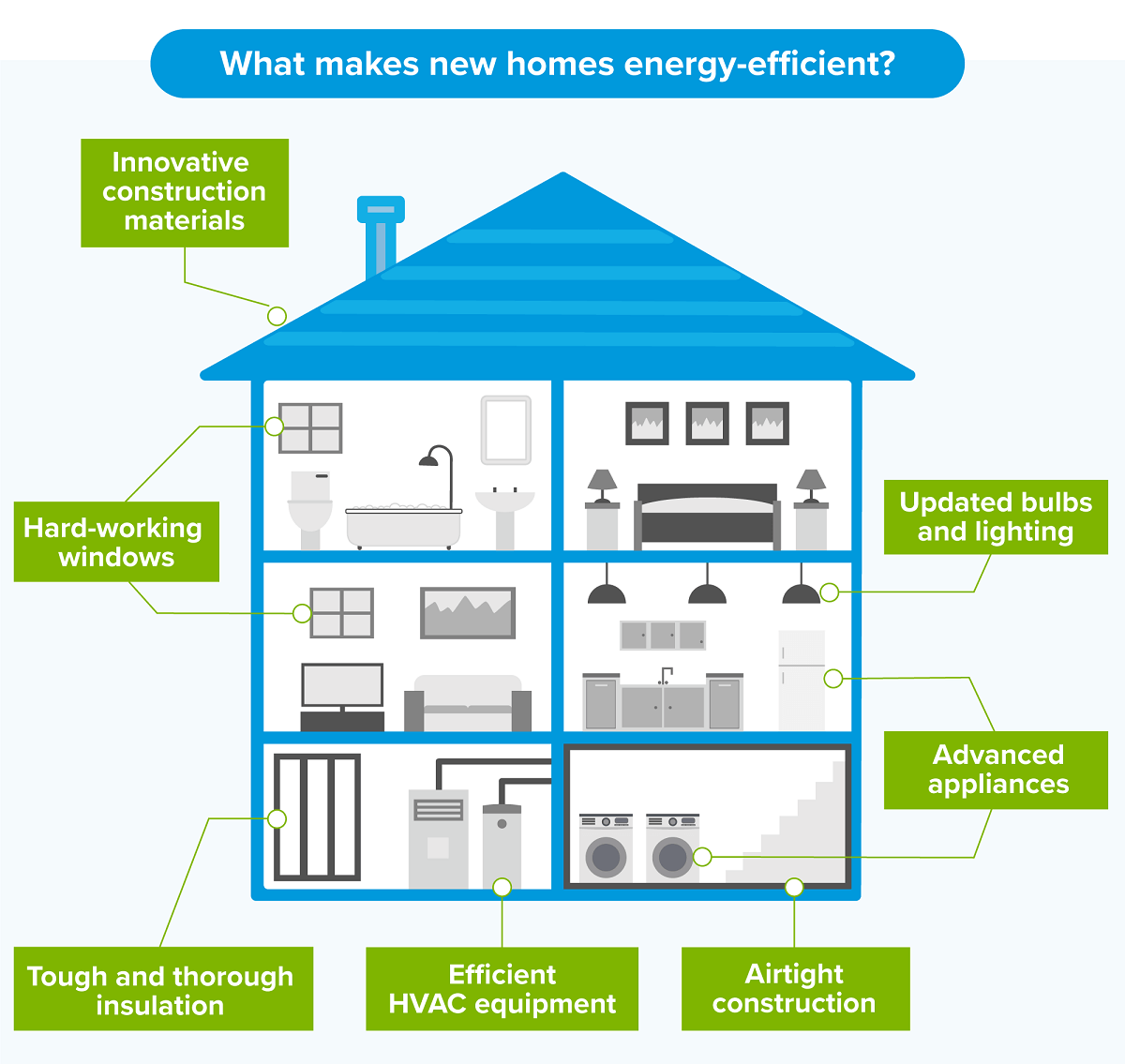
If you can run your air conditioner less because the cooled air isn’t escaping or hot air from outside pouring in, you’ve got efficiency gain. If your water heater can heat up faster without having to run a bunch of water first, there are more gains. If your appliances are designed from the start with efficiency in mind, still more gains.
While each of these components can work on their own, when you have them all working in tandem, that’s when you really begin to see dramatic improvement. And that’s what we call a high efficiency home.
What are ENERGY STAR homes?
An easy way to recognize a high efficiency home is if it’s ENERGY STAR-certified. This means it has been built to standards set by the Environmental Protection Agency and Department of Energy for homes in the ENERGY STAR energy efficiency program and subject to third-party testing, inspection, and certification. Specifically, the house is at a minimum 10% more efficient than homes built only to code.
What is the HERS Index?
The Home Energy Rating System (HERS) Index is the industry standard by which a home’s energy efficiency is measured. It’s also the nationally recognized system for inspecting and calculating a home’s energy performance.
A certified RESNET Home Energy Rater assesses the energy efficiency of a home, assigning it a relative performance score (the HERS® Index Score). The lower the number, the more energy efficient the home. A home built to 2006 energy efficiency standards scores 100.
- A home with a HERS® Index Score of 70 is 30% more energy efficient than the RESNET Reference Home.
- A home with a HERS® Index Score of 130 is 30% less energy efficient than the RESNET Reference Home.*
To calculate a home’s HERS® Index Score, a certified RESNET HERS® Rater does an energy rating on your home and compares the data against a ‘reference home’– a designed-model home of the same size and shape as the actual home, so your score is always relative to the size, shape and type of house you live in. The lower the HERS score, the more efficient the house.